





11 Jul , 09:16
0
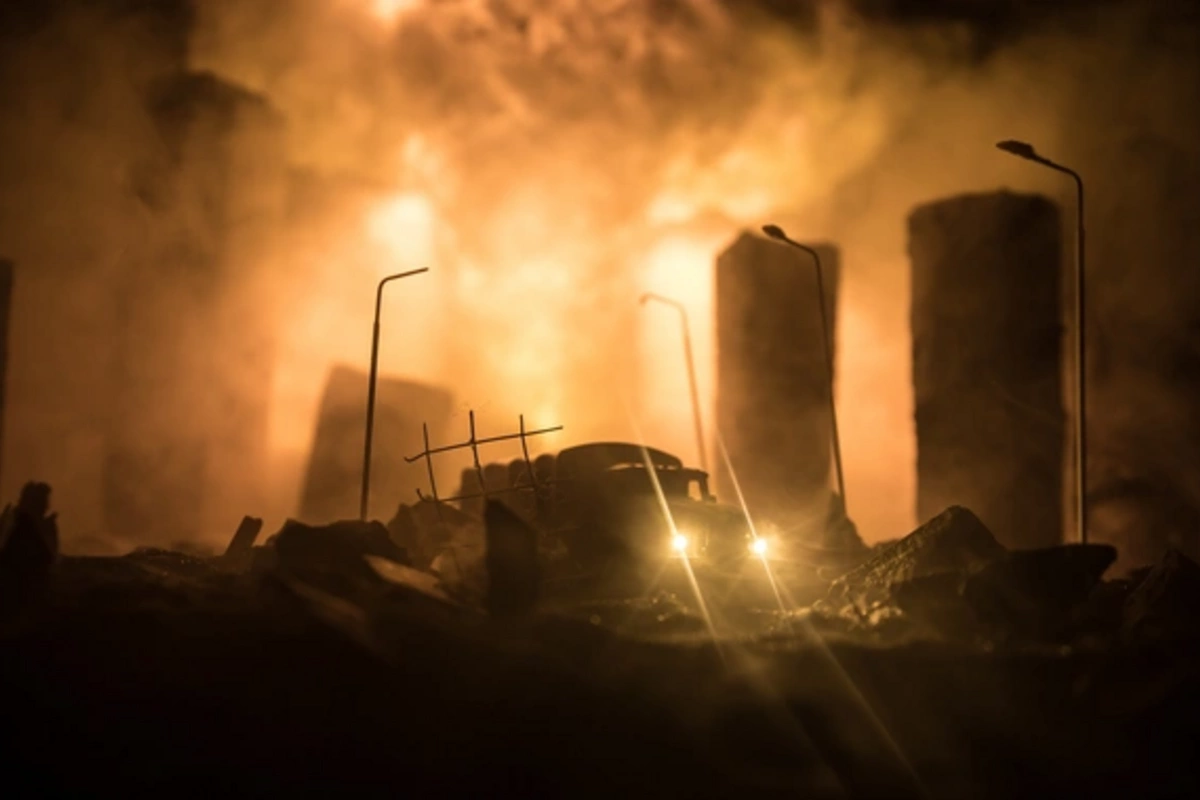
Earth's vegetation may hold on for almost another two billion years — this is the unexpected conclusion reached by scientists who modeled the future of our planet. The research findings are reported by the Daily Mail.
The large-scale study was undertaken by specialists from the University of Colorado Boulder in collaboration with Seattle-based company Blue Marble Space. At their disposal was a powerful three-dimensional climate model capable of accounting for fluctuations in temperature, cloud cover, precipitation, ocean conditions, and atmospheric circulation. Using it, the scientists looked two billion years into the future.
The main threat, according to the authors of the study, comes from the Sun itself. As it ages, our star will shine ever brighter and hotter. This will trigger a chain reaction: temperatures on Earth will continue to rise steadily, while the concentration of carbon dioxide — the key "fuel" for photosynthesis — will begin to drop. The plant world will start to shrink, and the last survivors on the planet will be the hardiest — cacti and plants that possess a special type of photosynthesis.
The scientists calculated two development scenarios: in the first, the concentration of carbon dioxide gradually decreases due to its absorption by rocks (certain rocks are capable of absorbing carbon dioxide through a process known as natural weathering, or mineral carbonation. — Editor's note, Gazeta.Ru); in the second, carbon levels remain roughly stable, and the main "killer" is the increasing heat.
The results proved encouraging: Earth's plant biosphere is capable of holding on for about 1.8 billion years. This is significantly longer than a number of previous studies had suggested. However, beyond this threshold, a grim prospect awaits the planet — Earth will begin to lose its oceans and become uninhabitable due to the further intensification of solar radiation.
That said, the authors made an important caveat: their model did not account for either the possible evolution of plants or potential technological breakthroughs by humanity. Both of these factors, in the scientists' opinion, could substantially extend the timeline of the biosphere's existence.
The researchers also acknowledged that plants could theoretically adapt to new conditions, and that life could migrate to the upper layers of the atmosphere and even beyond Earth. In parallel, scientists are already studying various methods of artificially reducing solar radiation, although the consequences of such technologies remain insufficiently studied for now.
The main takeaway of the study: life on our planet possesses remarkable resilience.