





14 Nov , 10:55 2025
16
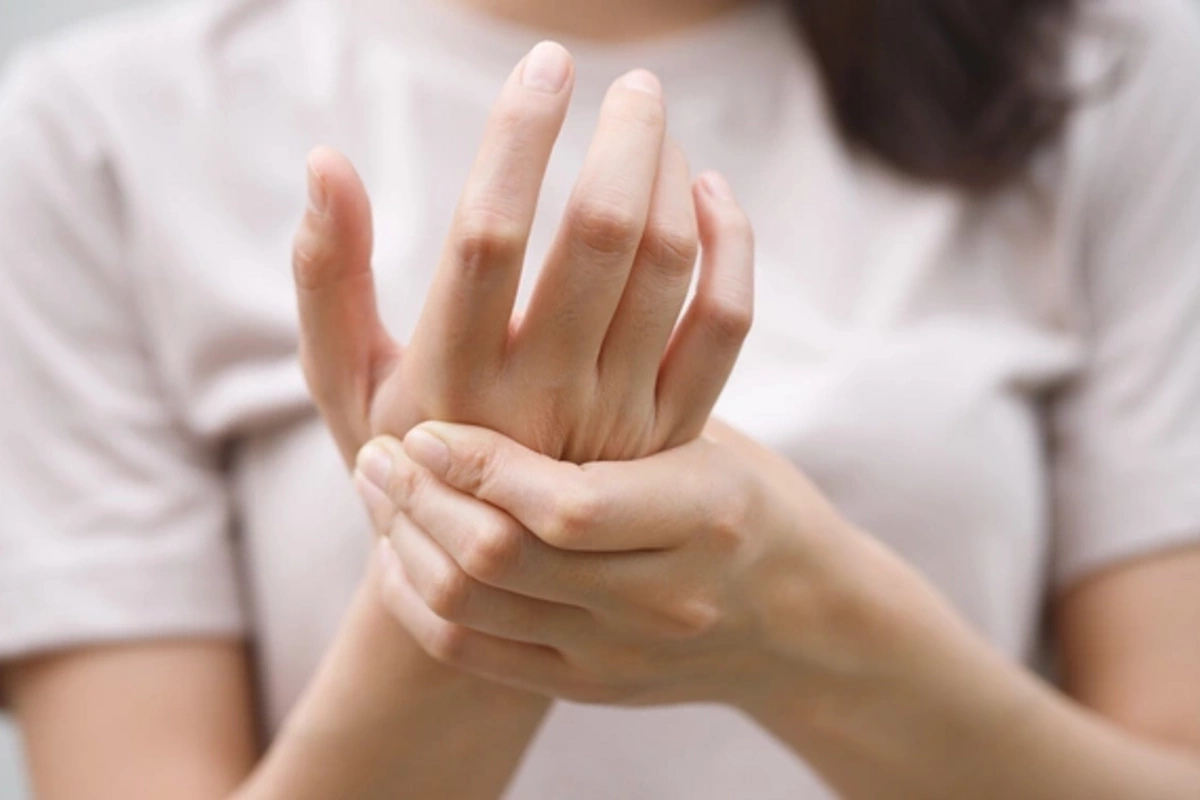
Cracking Fingers Habit: Harmless Pleasure or Health Threat?
As reported by TUT.AZ with reference to Gazeta.ru, neurologist Marianna Dzhikiya warns: regular joint cracking can lead to serious hand health problems, weakening ligaments and accelerating joint wear.
The expert dispelled a common misconception about the nature of the characteristic sound. It turns out that the cracking occurs not due to bone friction, but due to processes occurring in the synovial fluid, which serves as a natural lubricant for the joints.
"When a person suddenly bends or pulls a finger, the volume of the joint capsule increases, pressure drops, and microscopic gas bubbles form in the fluid. Their collapse creates that very click," explained Dzhikiya.
After each click, the joint needs about 15-20 minutes to recover, while the gases dissolve again in the fluid.
Although the doctor notes that the connection between cracking and arthritis is more of a myth than reality, this habit carries other dangers.
"The main danger is joint looseness and weakening of ligaments. Constant unnatural impact stretches the joint capsule and surrounding ligaments. Over time, they become less elastic, and the joint loses stability. This can lead to the so-called 'hypermobility syndrome'," emphasized the specialist.
The consequences can be very serious: decreased grip strength, constant pain, and increased risk of injuries. According to the neurologist, frequent cracking contributes to premature wear of the cartilage tissue of the joints.
"Although the clicks themselves do not cause inflammation, they can accelerate the development of arthrosis - mechanical wear of cartilage. Constant microtrauma during cracking leads to thinning of cartilage tissue, which eventually causes pain, limited mobility, and deformation," the neurologist explained.
Sudden movements when cracking fingers pose a particular danger.
"With a strong and sharp jerk, you can unintentionally overstretch or injure tendons and ligaments. In mild cases, this causes inflammation, and in severe cases - a serious injury requiring long-term treatment," clarified Dzhikiya.
The social aspect of the problem should not be forgotten either: many people are uncomfortable with the sound of cracking fingers.
For those who have decided to break this habit, the doctor offers several effective strategies:
Replace cracking with other movements: clench and unclench your fist, do simple finger exercises, fidget with an anti-stress toy or hand exerciser.
Do self-massage: gently knead your fingers and hands - this improves blood circulation and reduces the need for habitual clicking.
Learn mindfulness: pay attention to moments when your hand reaches to crack. Awareness is the first step to breaking the habit.
"No direct link between finger cracking and arthritis has been found. But the habit itself is harmful: it gradually undermines joint health, making them weaker and more vulnerable to injuries and early wear. Take care of your hands - they will thank you," concluded the specialist.