





20 Feb , 19:12
0

Japanese researchers have made an unexpected discovery: behind chronic constipation may lie not a lazy bowel, but a cunning bacterial duo systematically destroying the protective mucus from within. The results of the work by scientists from Nagoya University have been published in the journal Gut Microbes.
The mucous layer lining the walls of the large intestine performs several vital functions simultaneously: it retains moisture, ensures easy movement of contents, and protects the epithelium from bacterial invasion. When this barrier thins, stool transforms into a dry, dense mass.
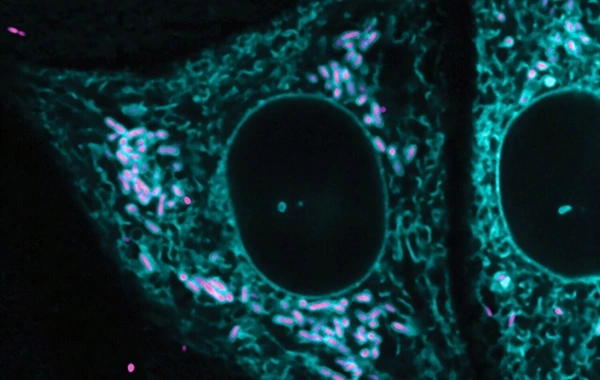
The culprits turned out to be two bacteria — Akkermansia muciniphila and Bacteroides thetaiotaomicron, operating according to a well-established scheme. First to attack is B. thetaiotaomicron: it produces the enzyme sulfatase, which strips protective sulfate groups from mucin. As soon as the "armor" is removed, A. muciniphila enters the fray, actively digesting the defenseless mucus.
The result of this tandem is a sharp reduction of the mucous layer, moisture loss, and hardening of fecal matter. The study authors emphasize: the problem lies not in slowed peristalsis, as traditionally believed, but in the destruction of the mucous barrier. This explains the low effectiveness of standard laxatives and motility-stimulating medications.
Of particular interest is the discovered connection with Parkinson's disease. In patients with this diagnosis, who suffer from constipation sometimes decades before the appearance of characteristic tremor, the concentration of mucus-destroying bacteria was found to be elevated. Previously, such symptoms were attributed primarily to nervous system damage.
"We genetically modified B. thetaiotaomicron so that it could not activate the sulfatase enzyme that removes sulfate groups from mucin," said lead author Tomonari Hamaguchi from Nagoya University. "When we placed these modified bacteria together with Akkermansia muciniphila in the intestines of germ-free mice, the animals did not develop constipation: the mucin remained protected and undamaged."
The experiment clearly demonstrated: blocking sulfatase activity can prevent destruction of the mucous layer. According to the researchers, this opens the way to creating fundamentally new drugs that will target specifically bacterial enzymes.