

21 Jan , 19:14
4
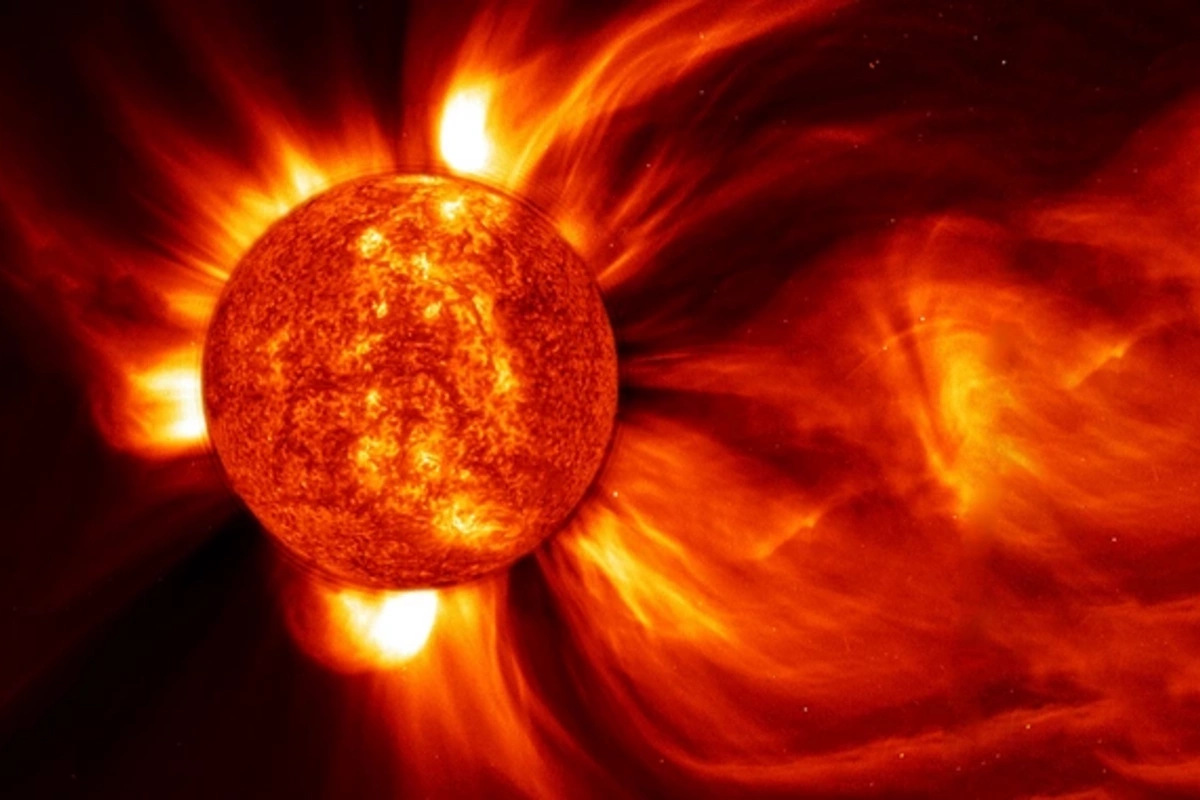
Solar flares turned out to be a chain reaction: scientists reveal unexpected mechanism of cosmic storms
Powerful solar flares, capable of causing magnetic storms and radio disruptions on Earth, don't start with a single "explosion" but with a chain of weak disturbances that rapidly intensify and trigger an avalanche-like process. Scientists reached this conclusion after analyzing unique data from the Solar Orbiter probe, operating under the guidance of the European Space Agency. The work was published in the journal Astronomy and Astrophysics (A&A).
The observations were made during a rare close approach of the spacecraft to the Sun. At this moment, Solar Orbiter recorded one of the most detailed studied solar flares in the history of observations. Scientists managed to track events almost 40 minutes before its peak and see how magnetic structures gradually accumulate and "unravel" in the solar corona.
According to the data, first, a system of thin, intertwined magnetic threads appears in the Sun's atmosphere, holding superheated plasma. These structures are unstable: separate sections of the magnetic field begin to break and immediately reconnect. Each such act of magnetic reconnection releases energy, which triggers the next one. As a result, the process takes on an avalanche-like character - weak events quickly grow into a powerful flare.
Of particular interest to scientists was a phenomenon they called "plasma rain." Even before the main phase of the flare and for some time afterward, flows of superheated plasma clusters rush down through the Sun's atmosphere. These flows are a sign that the energy of the magnetic field is actively transferred to the matter. According to X-ray observations, particles accelerate to speeds of 40-50% of the speed of light, which makes such flares potentially dangerous for space technology and astronauts.
Previously, the avalanche model was considered only as a statistical explanation for the large number of flares on the Sun and other stars. Now, for the first time, it has been shown that even a single large flare can be the result of a cascade of many small events. This changes our understanding of the energy release mechanism on the Sun and may improve space weather forecasts.
According to researchers, the data obtained is among the most important in the entire Solar Orbiter mission. They allow us to look into the "engine" of a solar flare and understand how small disturbances in the magnetic field grow into colossal energy releases. In the future, scientists hope to confirm that such a mechanism is universal and works not only on the Sun but also on other active stars.