





30 Apr , 22:34
0
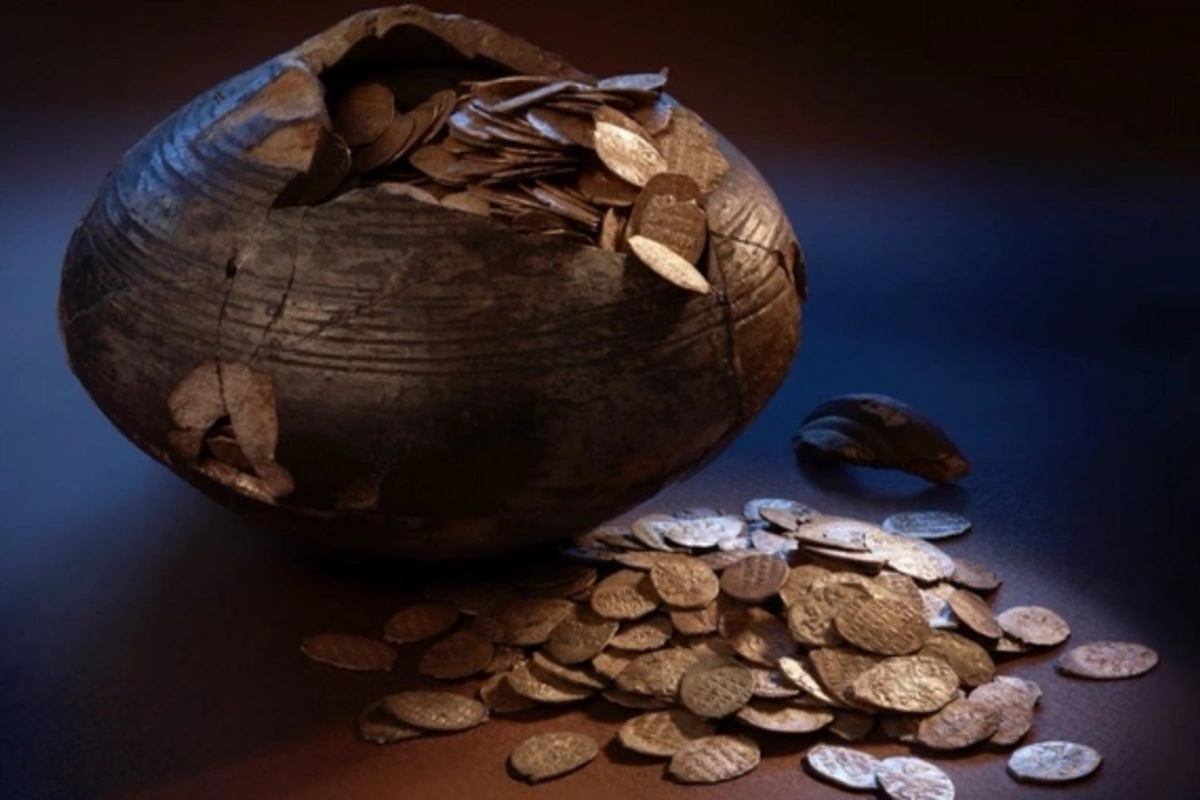
The largest Viking-era hoard in the country's history has been discovered in Norway — nearly three thousand silver coins and silver fragments have been unearthed from a field near the town of Rena in the municipality of Åmot. The find dates to the mid-11th century, according to Norwegian archaeologists from the Museum of Cultural History in Oslo.
The sensational hoard, already dubbed "Mørstad," was discovered on April 10, 2026, by two metal-detecting enthusiasts. Initially, the devices registered only isolated signals, but further excavation revealed a veritable trove of silver. By the end of the month, the number of recovered coins had exceeded 2,970 — an absolute record for Norway.
According to archaeologists, the vast majority of the coins are of foreign origin. Among them are English pennies minted under Kings Æthelred II and Cnut the Great, as well as coins from Germany, Denmark, and early Norway. The dating spans the period from the late 10th to the mid-11th century, suggesting that the hoard was buried around 1047.
Scholars link the find to the reign of the Norwegian king Harald Hardrada, during whose rule the country was only beginning to develop its own minting system. Before that, foreign currency predominated in circulation, arriving through trade and Viking military campaigns.
Archaeologists believe the hoard may have represented a personal or family fortune hidden during a period of economic instability. The region where the discovery was made was closely tied to iron extraction and trade during that era, making it one of the most important economic centers.
In addition to coins, the hoard contained silver fragments used as payment ingots, as well as jewelry elements. The exceptional preservation of the items deserves special attention — thanks to the particular composition of the soil, the silver suffered virtually no corrosion.
According to specialists, the discovery is of enormous significance for the study of Viking-era economics and trade connections and has the potential to shed new light on the formation of monetary circulation in Scandinavia.