





26 Sep , 09:55
0
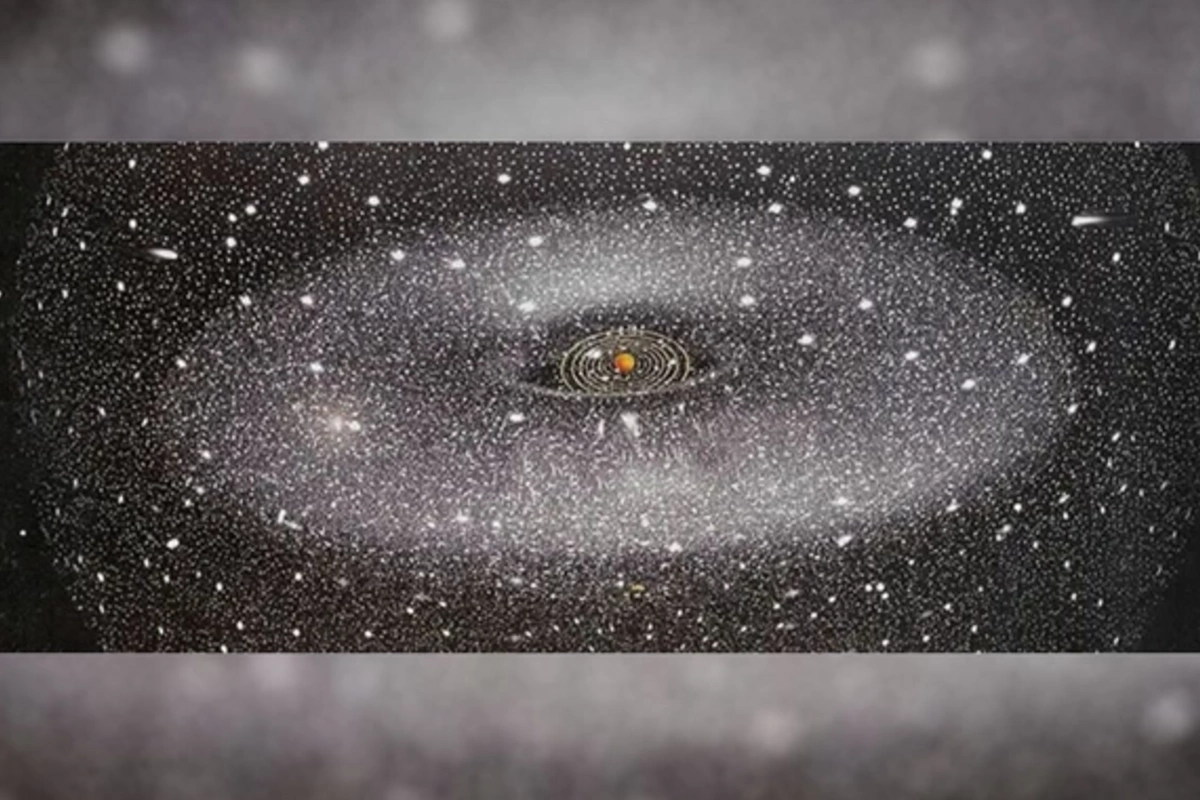
Ancient meteorites have preserved traces of a powerful magnetic field that raged at the dawn of the Solar System and may have played a decisive role in transforming a cloud of gas and dust into the Sun and planets. The field turned out to be 3 to 12 times stronger than Earth's current magnetic field. The results of the study have been published in the journal Proceedings of the National Academy of Sciences.
A protoplanetary disk — a rotating cloud of gas and dust around a young star — is the cradle of future planets. One of the main mysteries of its evolution is how the disk's material lost its angular momentum and rushed toward the center. Magnetic fields have long been considered one of the key "drivers" of this process, but direct evidence has been lacking until now. Meteorites, in this regard, are invaluable time capsules that have carried to us material from the very dawn of the Solar System.
A team of scientists from the Massachusetts Institute of Technology, together with colleagues, studied microscopic grains — so-called calcium-aluminum-rich inclusions — in the meteorite DOM 08006, discovered in Antarctica in 2008. These inclusions are among the oldest solid bodies in the Solar System: they formed within approximately the first 200,000 years of its existence.
Magnetic minerals inside these grains acted as tiny "tape recorders": they preserved remanent magnetization — a frozen "imprint" of the field in which they once formed. This imprint has endured for billions of years. From it, the researchers determined the strength of the ancient field: from 150 to 600 microtesla.
This field is believed to have been created and sustained by electrically charged particles swirling in the protoplanetary disk around the young Sun. Magnetic fields in such disks play a key role: they cause material to lose angular momentum and fall toward the center, effectively "assembling" the star and planets together. Previously, the strength of these fields was judged primarily through theoretical models, but now scientists have obtained direct physical evidence. The data refine our understanding of how planetary systems are born — both our own and countless others across the Universe.