






03 Dec , 22:56 2025
12
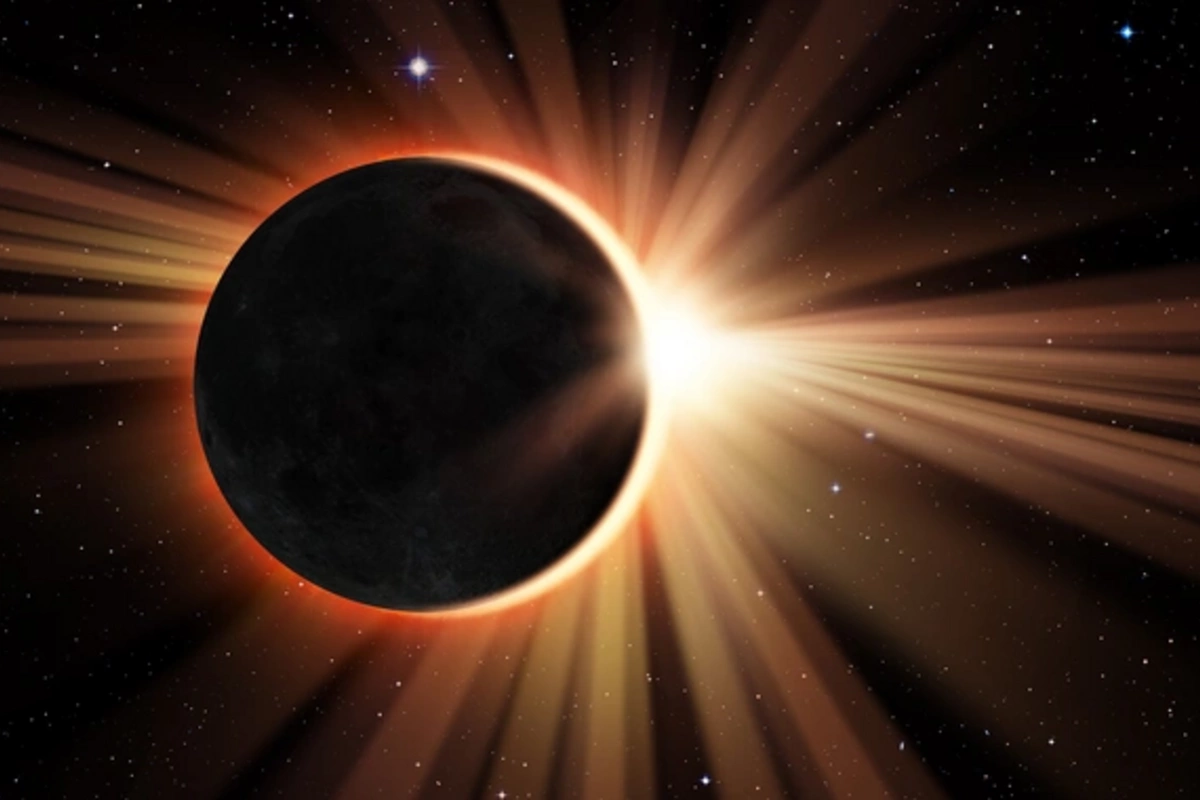
Scientists have refined data on the oldest observation of a total solar eclipse in China in 709 BCE, which allowed them to determine the speed of Earth's rotation almost 3000 years ago with incredible precision. The research results have been published in the prestigious scientific journal The Astrophysical Journal Letters (AJL).
The mystery that has troubled astronomers for many years has finally been explained. Calculations consistently indicated that the total phase of the eclipse could not have been observed from the princely court of Lu in the ancient city of Qufu. Researchers came to an unexpected conclusion: the problem was not in the mathematical formulas, but in incorrectly determined location. Referring to archaeological evidence, scientists established that the previous coordinates of ancient Qufu contained an error of almost eight kilometers. After making adjustments, theoretical calculations perfectly matched historical chronicles.
This discovery became a real breakthrough in determining the characteristics of our planet's rotation in the 8th century BCE. Clarifying the geographical position allowed for highly accurate calculation of the parameter describing the irregularity of Earth's rotation in antiquity. The obtained data significantly correct existing models and provide more accurate time references for ancient astronomical phenomena. The study confirmed that in those times our planet rotated faster than now, gradually slowing down due to tidal friction caused by the gravitational effect of the Moon on the oceans.
The research clearly demonstrates the enormous value of ancient astronomical observations when analyzed using modern methods. Chinese astronomers meticulously recorded celestial phenomena, considering them important omens for rulers, and these records continue to serve science after millennia. The authors of the work emphasize that the unique combination of ancient chronicles, archaeological findings, and modern computational methods allows us to literally look into the past, reconstructing the history of our planet's rotation and solar activity with remarkable detail.