







04 Apr , 18:29
0
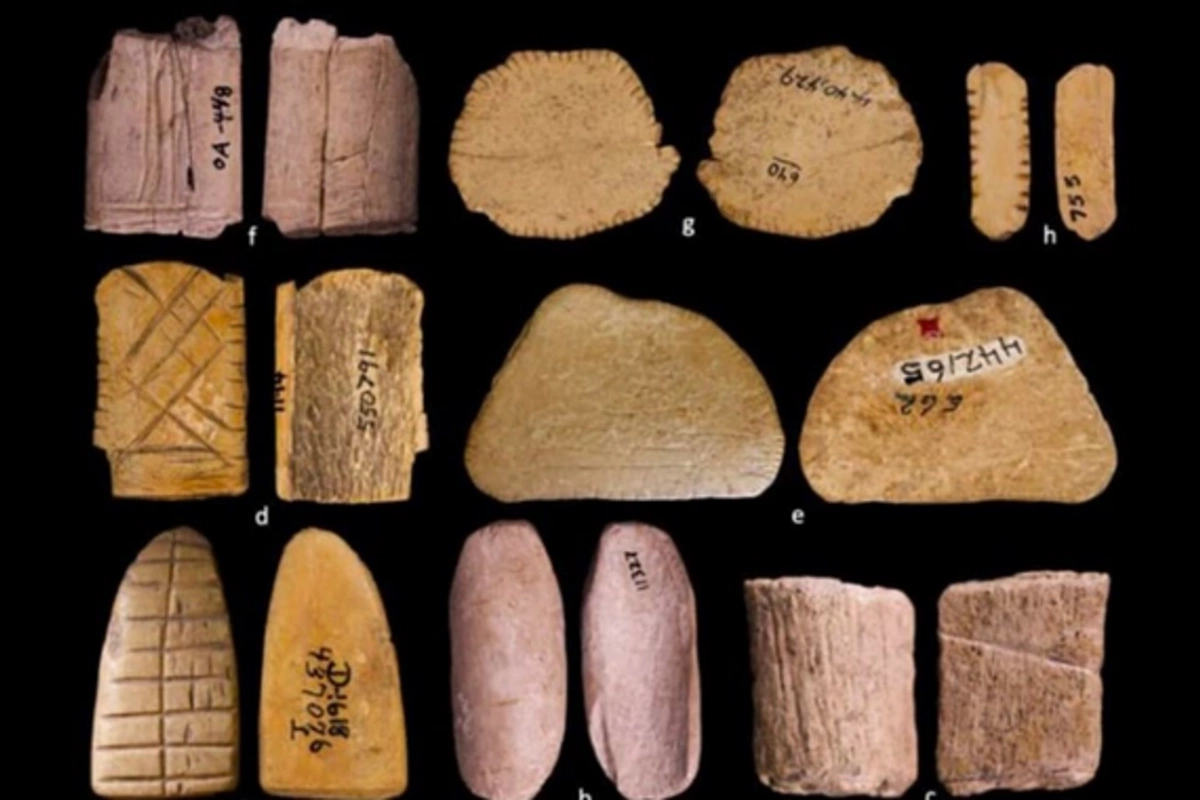
American archaeologists have made a discovery that upends our understanding of the history of gambling: it turns out that gaming "dice" did not originate in ancient Mesopotamia, but in North America — approximately 12 thousand years ago. This is thousands of years earlier than previously believed. This was reported by NBC News.
Behind the discovery is Robert Madden, a graduate student at Colorado State University. He meticulously analyzed dozens of old archaeological reports and compiled scattered data from finds that had not previously been considered in this context.
"We can see that as early as 12 thousand years ago, people in North America were operating with fairly complex abstract concepts — chance and probability. In the Old World, this came significantly later," the researcher noted.
The objects in question are small items made of bone or wood, typically two-sided, that were used as gaming dice. They were deliberately crafted so that the outcome of a throw would be random, and the sides were marked with different symbols or colors.
Until now, the scientific community believed that such objects appeared approximately 2 thousand years ago. However, Madden convincingly demonstrated that analogous artifacts existed as far back as the Folsom culture era — at the end of the last Ice Age, around 12–13 thousand years ago, in the territory of present-day Nebraska, Wyoming, and Colorado.
Remarkably, the tradition proved to be unbroken: dice were used in the region for millennia — right up to contact with Europeans and even after it.
As the researchers emphasize, gambling among the Indigenous peoples of North America went far beyond mere entertainment. According to Robert Weiner of Dartmouth University, "in these cultures, gambling often served a social and even ritual function, bringing people together."
In oral traditions, such games are frequently intertwined with mythology — for example, in the stories of the Zuni people, the gods themselves are fond of gambling.
Scientists hypothesize that games may have served as a tool of social communication — especially among mobile groups that periodically met and exchanged information. At the same time, many questions remain unanswered. In particular, it is unclear whether ancient players understood the mathematical patterns of probability or acted purely on intuition.
Nevertheless, the study leads to an important conclusion: the Indigenous peoples of North America may have been among the first in human history to engage with abstract ideas of chance and probability — concepts that form the foundation of modern science and economics.
"We are talking about an intellectual achievement that has long been underappreciated," Madden emphasized.