






07 May , 21:34
0
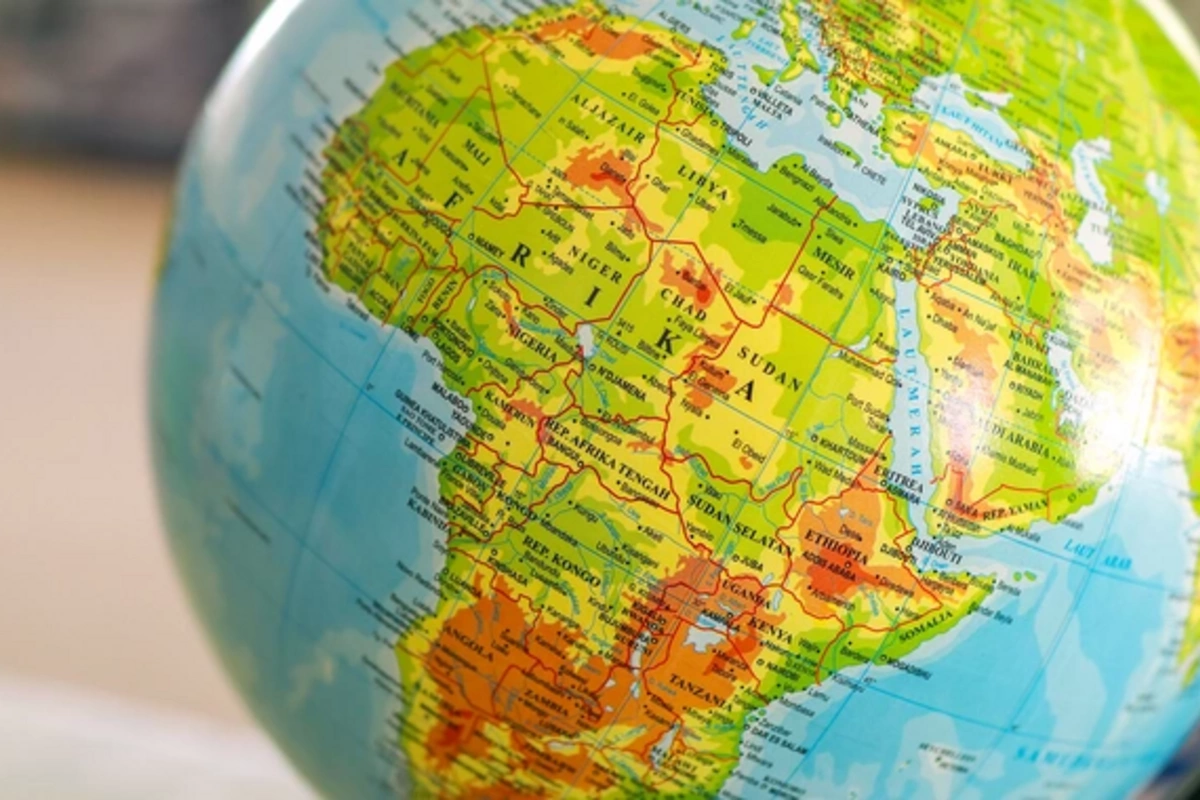
Africa is splitting apart faster than scientists thought: the Earth's crust in the rift zone has thinned to a critical threshold. Geologists from Columbia University have discovered that the East African Rift has entered an irreversible stage of splitting — and this happened ahead of all forecasts. The results of the study have been published in the journal Nature Communications.
Right now, the African tectonic plate is slowly tearing in two. The Nubian Plate is forming to the west, and the Somali Plate to the east. An entirely new ocean will eventually appear between them. This process, known as rifting, is unfolding before geologists' eyes — albeit on scales beyond human perception.
The key data were obtained in the Turkana Rift Zone, which stretches across Kenya and Ethiopia. Seismic measurements delivered a surprise: at the center of the rift, the Earth's crust is only about 13 kilometers thick, whereas at its edges it exceeds 35 kilometers. The difference is nearly threefold.
And it is precisely this figure that became an alarming signal. As scientists have established, when the crust thins to 15 kilometers, a stage known as "necking" is triggered — after which the splitting of the continent becomes virtually irreversible. Geologist Crispin Rowan emphasized: the Turkana zone has already crossed this threshold, meaning Africa's breakup has progressed much further than the scientific community believed.
The further scenario looks like this: as the crust continues to thin, magma will begin rising from deep within the Earth, forming new oceanic crust. Then the waters of the Indian Ocean will rush into the resulting crack — and a new oceanic basin will be born. Something similar is already happening in the Afar Depression in the northeast of the continent.
However, there is no need to rush into panic. When geologists say "faster than expected," they are referring to geological time: a complete split will take millions of years. Nevertheless, compared to previous estimates, the rate of the rift's development has turned out to be significantly higher.
A curious detail: active tectonic processes in the region, according to scientists, played an unexpected role in paleontology. The accelerated accumulation of sedimentary rocks helped preserve ancient fossils — including the remains of early human ancestors.