





08 Jan , 11:57
5
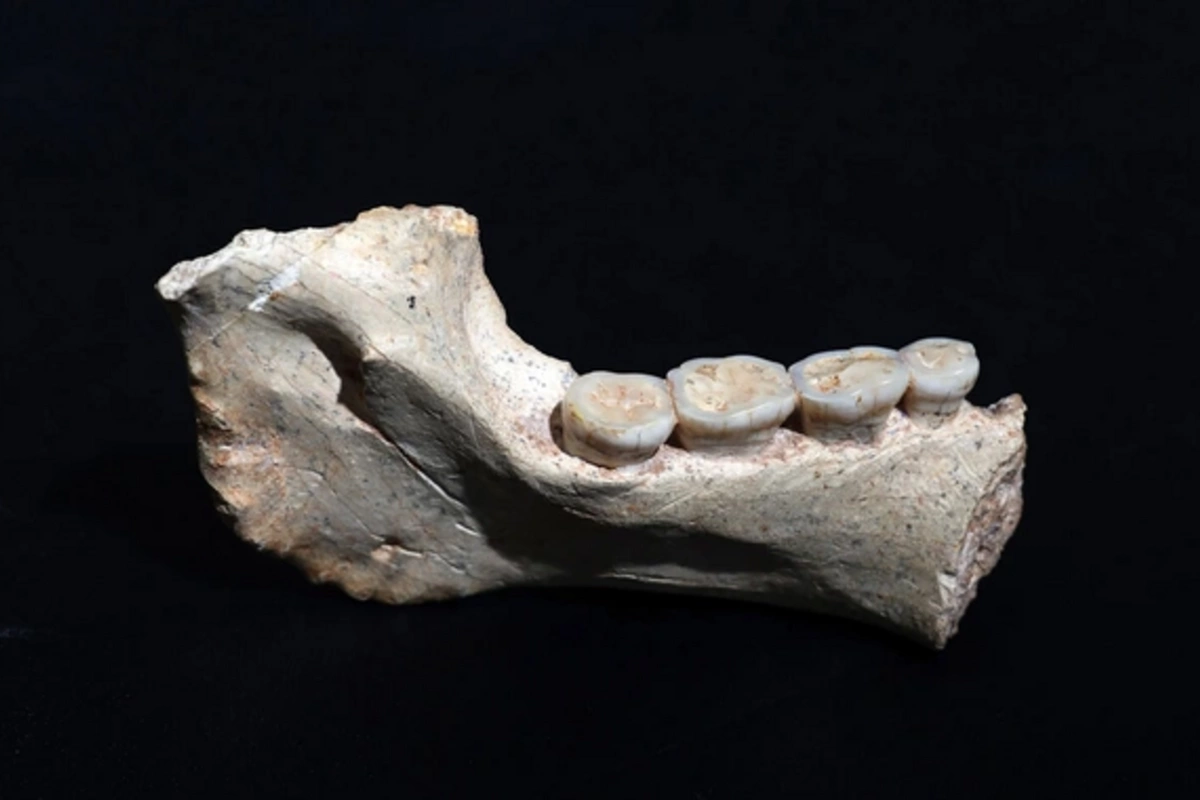
Sensational discovery: remains of a possible common ancestor of humans and Neanderthals found in Morocco. The Ministry of Youth, Culture, and Communication of the kingdom presented unique fossils that could rewrite the history of human evolution. An international archaeological expedition made this amazing discovery in the "Thomas-1" quarry near Casablanca on the Atlantic coast of the country, reports TASS.
The amazing find includes part of an adult human's lower jaw, a fully preserved child's lower jaw, a fragment of a femur, as well as several teeth and vertebrae. Scientific research has established the impressive age of the find - from 700 to 773 thousand years, which places it in the deep antiquity of human evolution.
In conversation with TASS, Professor Abderrahim Mohib from the National Institute of Archaeology and Heritage of Morocco, one of the project leaders, spoke about the exciting research results. Comprehensive scientific examination using electromagnetic radiation revealed in the remains a unique combination of primitive morphological characteristics of Homo erectus with more progressive features resembling the morphology of Homo sapiens. The professor emphasized that this discovery represents "a crucial link in understanding the evolution of modern humans and the parallel line of development that led to the formation of other human species discovered in Europe."
Speaking about the revolutionary significance of the find, Mohib noted that the discovered remains date back to the critical period of branching of the main evolutionary lines of humanity: the African line, which led to the emergence of Homo sapiens, and the Eurasian line, which gave rise to Neanderthals. That is why, according to the scientist, the fossils found may belong to "the most likely candidates for the role of common ancestor of Homo sapiens and Neanderthals."
It is worth noting that recently an international group of anthropologists has already questioned the traditional theory about the first Homo sapiens leaving Africa through the eastern coast of the continent.