









13 Aug , 09:34
0
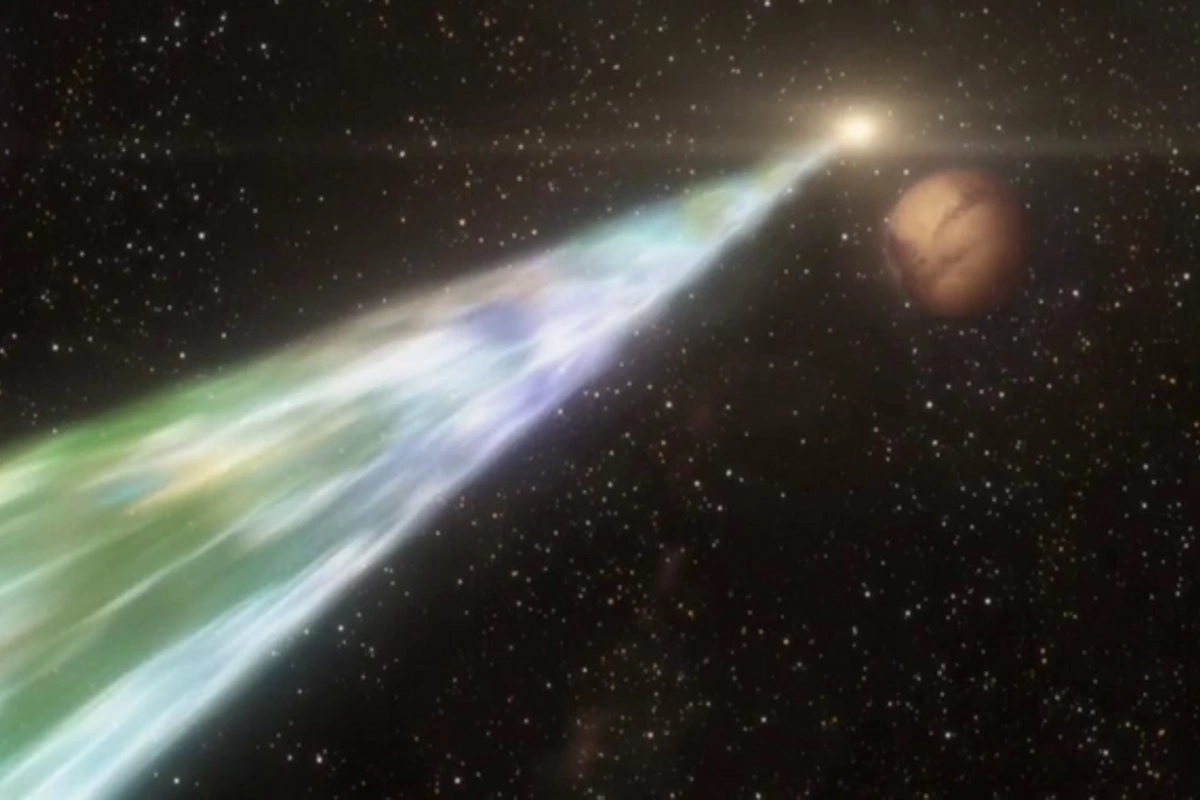
American scientists have demonstrated a remarkable phenomenon: wave interference can accelerate energy peaks to speeds exceeding the speed of light. At the same time, no violation of the special theory of relativity occurs — information is still not transmitted faster than the light barrier. The results of the study have been published in the journal Physical Review E.
The unexpected discovery was made during computer modeling of sound propagation. The calculations revealed a striking picture: a signal traveling at 1,500 m/s produced energy peaks that behaved as though they were racing at 1,694.5 and even 2,782.5 m/s. The secret lies in the superposition of a direct wave and a reflected wave — their interference shifts the energy peak forward, and it appears sooner than a single direct wave would have arrived.
"The speed of information transfer is less than or equal to the speed of light in a vacuum," emphasized the lead researcher, University of Pennsylvania acoustician John Spiesberger. Together with his colleague from the Woods Hole Oceanographic Institution, Eugene Terray, he reached this conclusion while working on a very practical task — developing methods for tracking whale communications using hydrophones.
A control experiment with binary signals consisting of zeros and ones settled the matter once and for all: the information itself cannot outrun the direct wave, even though interference creates the illusion of a kind of "acceleration." The authors particularly note that the mechanism they discovered is fundamentally different from quantum tunneling and anomalous dispersion — two other phenomena in which "superluminal" effects had also previously been observed.
The researchers believe that a similar phenomenon may also manifest for light in a vacuum. The next step will be experimental verification of the effect — using sound or light waves.