









16 Aug , 19:29
0
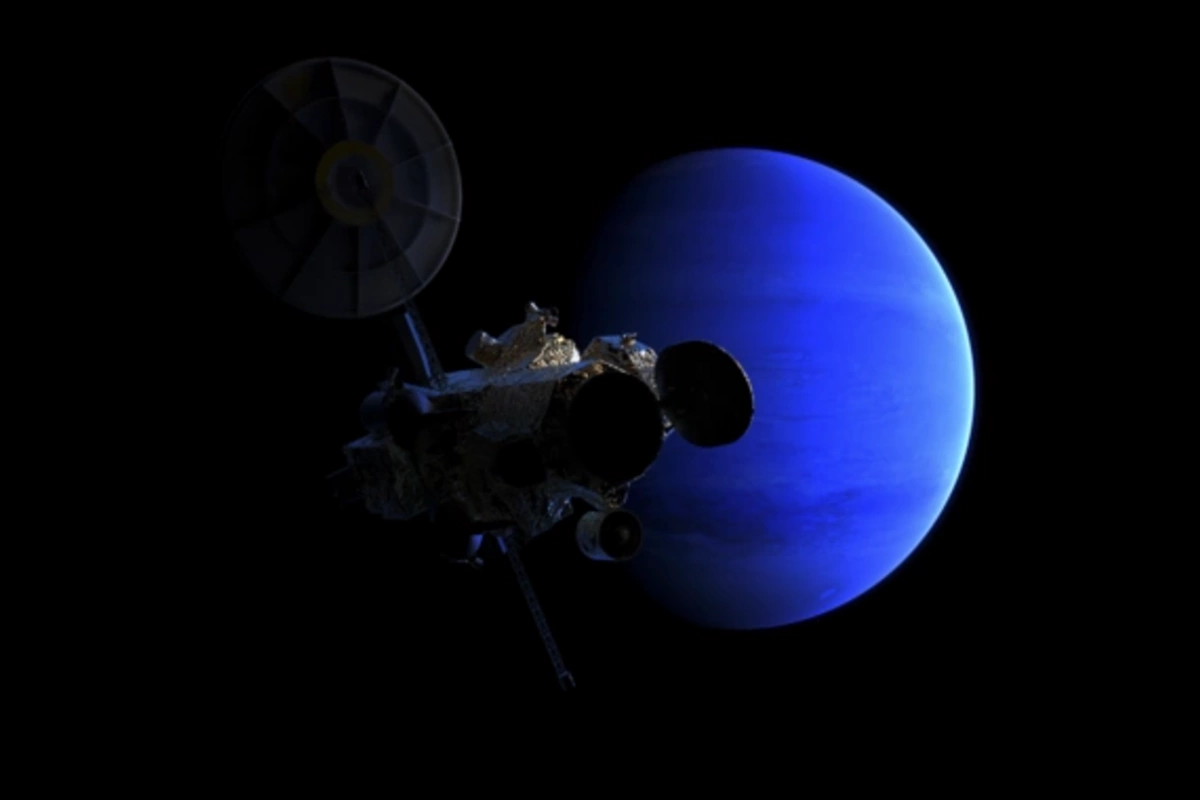
The James Webb Telescope has made an unexpected discovery: clay minerals that can only form in the presence of liquid water have been found on Neptune's moons — even though water ice itself is nowhere to be found there. Scientists believe these are traces of a grand catastrophe that unfolded billions of years ago, when Neptune captured its largest moon, Triton. The results of the study have been published in the journal Science Advances.
Clay minerals — phyllosilicates — were discovered on the moons Larissa and Galatea. Until now, such minerals had never been detected in the outer part of the Solar System, beyond the orbit of Jupiter.
According to the researchers' calculations, only about 1% of the original material survived after the catastrophic event in Neptune's system. The capture of the massive Triton could have torn apart the existing satellite system and completely reshaped it.
"We were amazed to find these clays," admitted the lead author of the study, Riley DeWitt, a researcher at the California Institute of Technology. According to her, all three studied moons contain the same hydrated mineral, which so far cannot be matched to any sample in existing catalogs.
Neptune's inner moons, the authors emphasize, are one of the very few places in the Solar System where one can directly peer into the interiors of large icy bodies and study their composition.