





23 May , 09:54
0
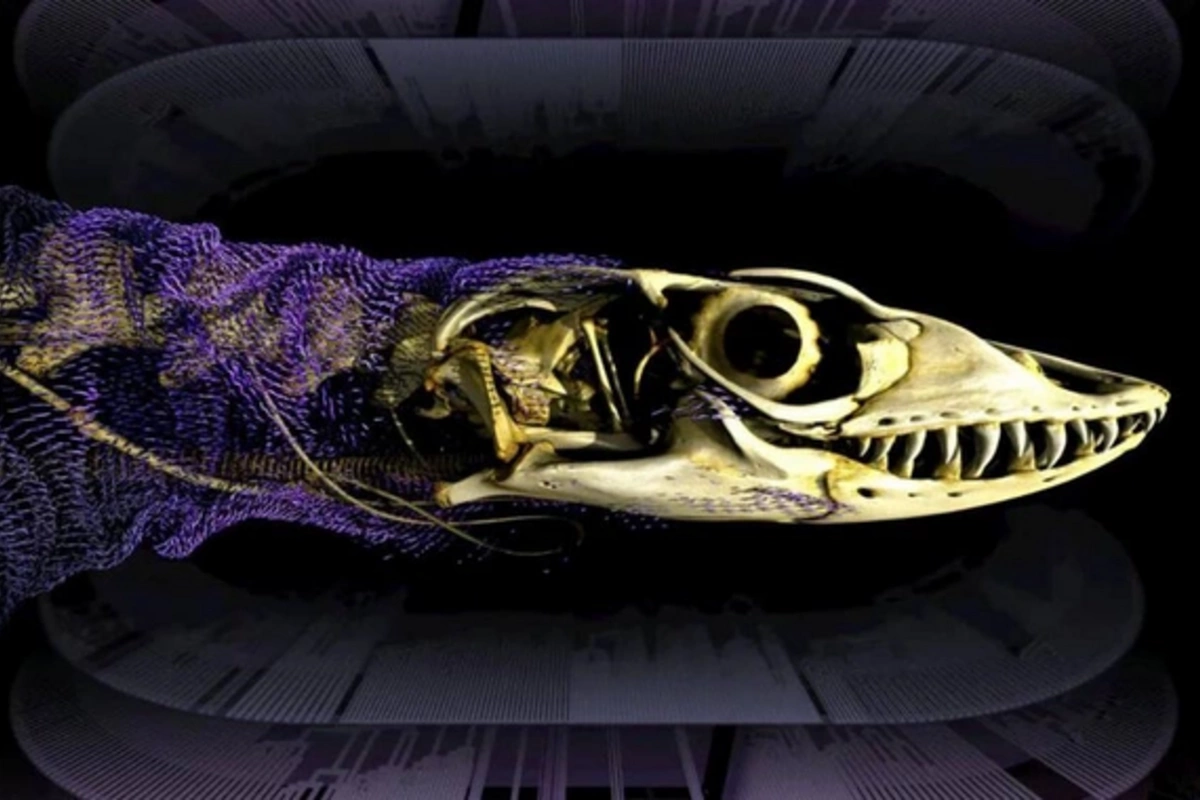
An international team of researchers traced 320 million years of dermal bone evolution in reptiles and reached a striking conclusion: bony plates — osteoderms — arose in different groups of lizards entirely independently of one another. Moreover, monitor lizards turned out to be capable of re-"restoring" lost armor, which challenges one of the classic principles of evolutionary biology. The study was published in the Biological Journal of the Linnean Society (BJLS).
Osteoderms are bony formations that develop directly within the skin. They are found in crocodilians, turtles, certain lizards, snakes, and even dinosaurs. It is believed that the first such structures appeared approximately 475 million years ago in ancient vertebrates — long before the internal bony skeleton had formed.
To unravel the origin story of these remarkable structures, scientists analyzed data on 643 living and fossil reptile species, then used computational methods to reconstruct the complete picture of dermal armor evolution.
It was found that most lizards acquired osteoderms during the Late Jurassic and Early Cretaceous — more than 100 million years ago, in an era when brachiosaurs, allosauruses, and stegosaurs roamed the Earth. According to the researchers, the armor helped defend against predators, colonize new habitats, and adapt to changing climates.
But the most intriguing story turned out to be that of monitor lizards — a group that includes Australian goannas. Their ancestors completely lost their bony armor: apparently, an active lifestyle and rapid movements were incompatible with the extra weight. However, after colonizing Australia approximately 20 million years ago, the descendants of these reptiles re-developed osteoderms.
Scientists attribute this phenomenon to the climatic changes of the Miocene, when Australia was rapidly becoming more arid. Dermal bones may have reduced water loss and provided additional protection in open, arid landscapes.
According to the authors, monitor lizards are the only known lizard lineage that managed to regain osteoderms after their complete loss. This directly contradicts Dollo's law — the hypothesis that complex traits, once lost, do not re-emerge.
The study also settles a long-standing scientific debate about the origin of dermal armor. In the early 20th century, the prevailing view was that all lizards inherited osteoderms from a single common ancestor. The new work convincingly demonstrated that armor arose multiple times and independently across highly diverse evolutionary lineages.
Now scientists face the next challenge — deciphering the genetic mechanisms that allow the skin to reinitiate bone tissue formation after millions of years of evolutionary "silence."