




25 Jul , 14:37
0
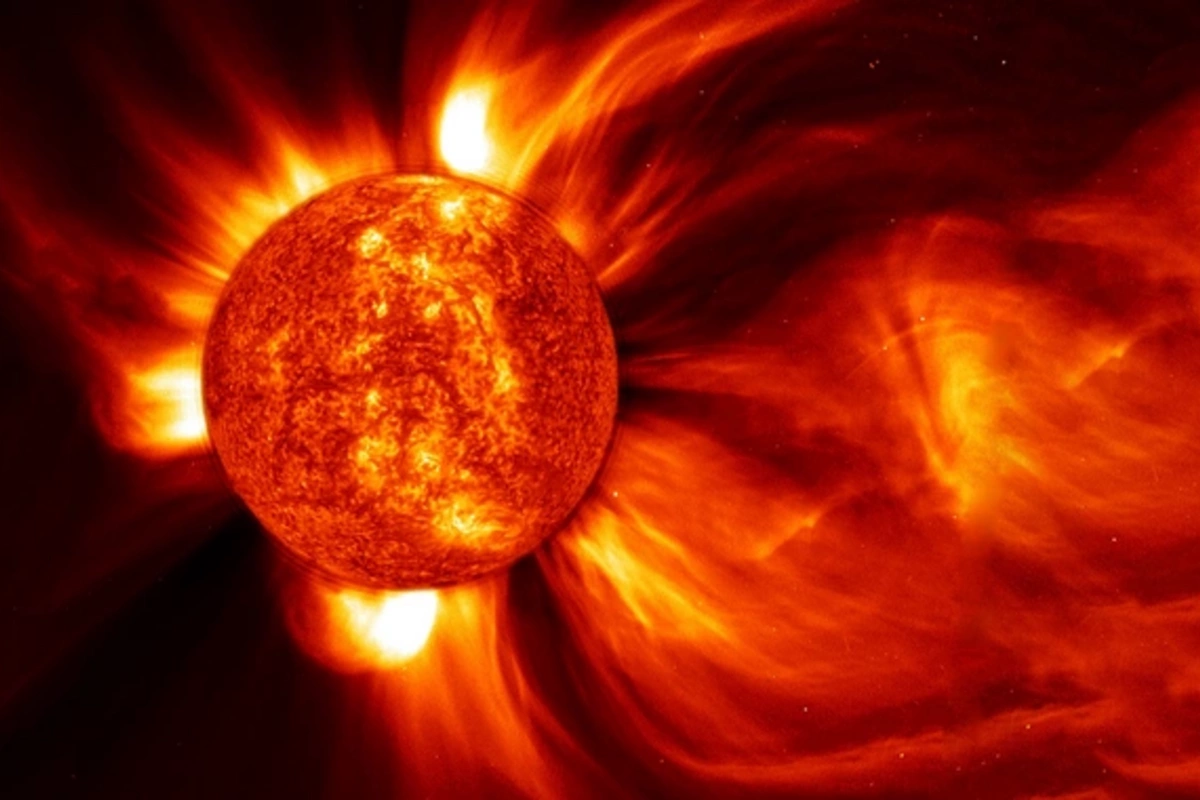
Magnetic storms are capable of paralyzing global satellite communications, sharply increasing radiation exposure doses for astronauts and pilots, and triggering large-scale blackouts in power grids. This is the conclusion reached by specialists from NASA's Goddard Space Flight Center and Lancaster's School of Physics and Astronomy in their study published in the journal Nature.
The scientists managed to disprove the long-held assumption that the impact of solar wind supposedly weakens after passing a certain point in the upper layers of Earth's atmosphere. As the study showed, this is nothing more than an illusion: our planet's response to space weather increases proportionally to the intensity of the impact and shows no signs of tapering off.
According to the specialists, under extreme conditions, satellites risk being knocked out of orbit, while GPS signals and communication channels could be disrupted. In light of this, the study's authors strongly recommended that when modeling such scenarios, it should be taken into account that there is simply no upper limit to Earth's response to solar wind.
On July 13, Perm National Research Polytechnic University (PNRPU) reported that the Sun's magnetic field turned out to be governed by one of the most well-known laws of turbulence physics. Scientists discovered for the first time that fluctuations of the magnetic field at the star's poles are distributed according to a law that Soviet mathematician Andrey Kolmogorov derived back in 1941.