




30 Jul , 22:16
0
Building engineering specialists Amin Al-Habaibeh and Francesco Luca Siena have revealed an unexpected truth: sound sleep in the heat begins not the moment your head hits the pillow, but many hours before—and depends on how much the house itself has heated up during the day. This is reported by The Conversation.
Sleep is directly linked to thermoregulation: to fall asleep and not wake up in the middle of the night, the body needs to shed excess heat, and a sweltering bedroom turns this process into a real ordeal. High humidity only adds fuel to the fire—the body tries to cool itself through sweat evaporation, but in humid air this mechanism works far less effectively. Air conditioning could save the situation, but it is far from accessible to everyone: according to the authors' calculations, even a compact portable unit with a capacity of around 1 kW, running seven hours a day, consumes approximately 55 pounds' worth of electricity per month—and that's without accounting for the cost of the device itself.
The first and most important step is to keep the sun out of the house during daytime hours: closing curtains and blinds on the sun-facing side, while external shutters and awnings handle the task even more effectively by reflecting heat before it reaches the glass. It makes sense to open windows only when it is cooler outside than inside—typically early in the morning, in the evening, or at night—and to keep them tightly shut during the peak of the heat.
Cross-ventilation—open windows or doors on opposite sides of the house—is excellent at drawing out accumulated heat once the outdoor air finally cools down. Conservatories, rooms with sun-facing windows, as well as upper floors and attics heat up particularly intensely: ventilation, reflective films, and ideally moving to a lower floor or a north-facing room for the night come to the rescue.
Ovens, washing machines, and dishwashers noticeably raise the temperature and humidity in the home—it is better to run them earlier in the morning or later in the evening, while extractor fans during cooking and showering help remove hot humid air before it spreads throughout the entire apartment. Light, breathable bed linen made of cotton or linen allows the body to freely release heat, whereas heavy blankets and synthetics do precisely the opposite, turning the bed into a steam room.
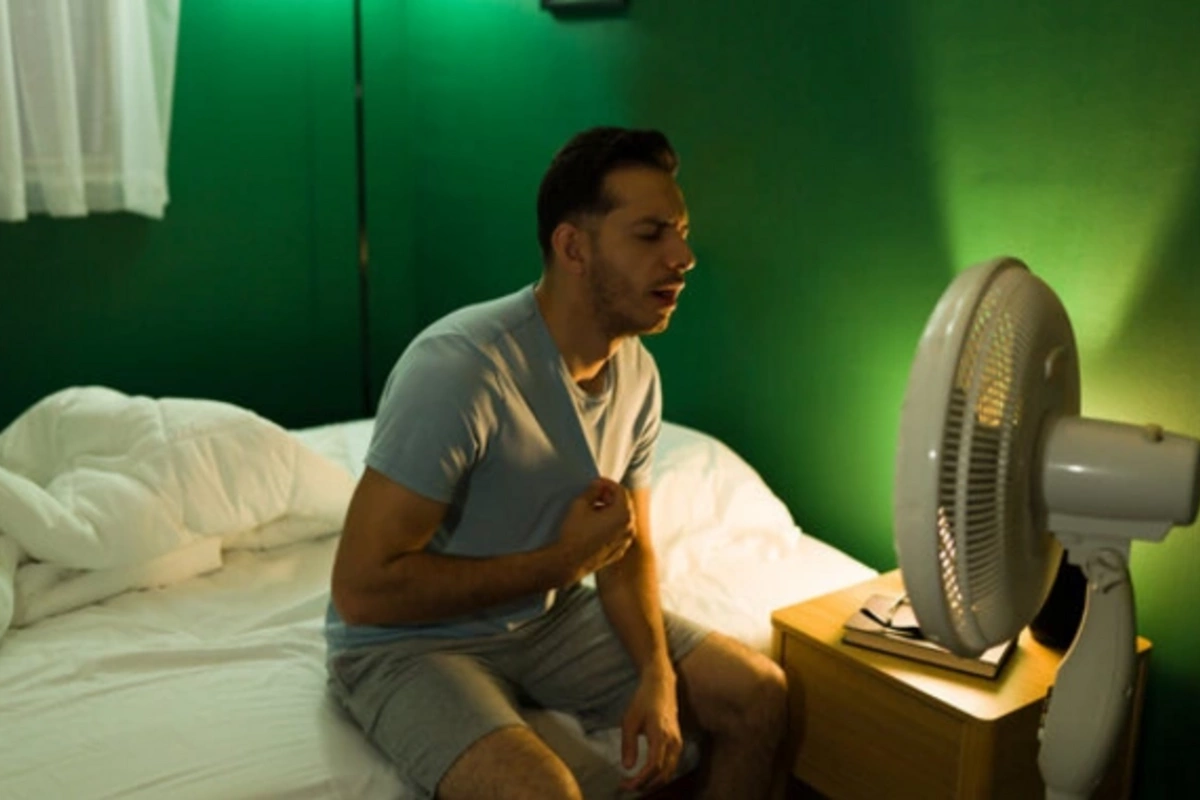
Fans, contrary to popular belief, do not cool the air—they merely move it across the skin, accelerating sweat evaporation. This may prove insufficient for elderly or dehydrated people during periods of intense heat. Frozen hot water bottles wrapped in fabric and mattresses with phase-change materials also make their contribution. However, as the authors emphasize, the best results come not from any single life hack but from combining all eight measures simultaneously.