



02 Jun , 15:13
0
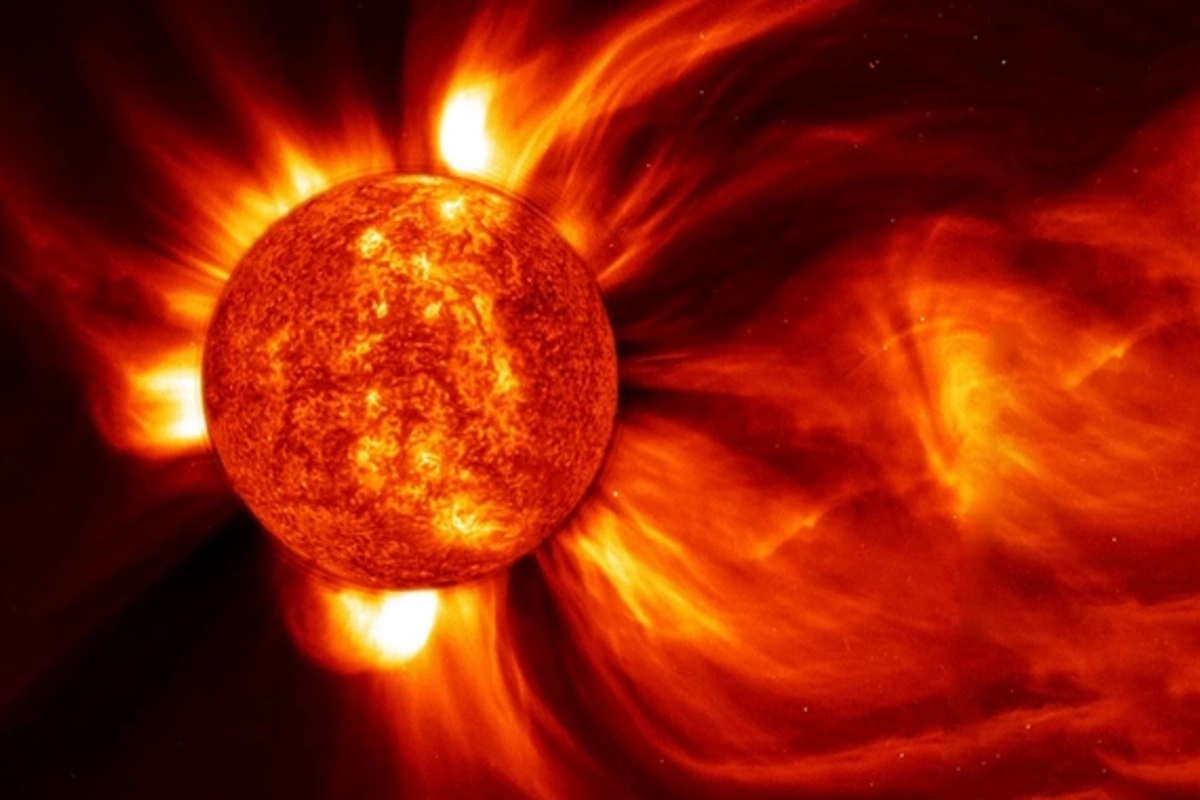
Astronomers have recorded a shift in the Sun's internal "pulse" — this may indicate a deep restructuring of magnetic processes in the star's interior and could fundamentally change our understanding of space weather.
As reported by TUT.AZ with reference to a study published in the journal Monthly Notices of the Royal Astronomical Society, a team of specialists from the University of Birmingham peered into the very heart of our star using the method of helioseismology. This unique approach allows scientists to "listen to" sound waves penetrating the Sun's interior and identify processes hidden from direct observation.
The researchers analyzed a colossal dataset collected by the global BiSON telescope network over nearly four decades — from 1987 to 2025. The results proved unexpected: starting around Solar Cycle 23, the familiar relationship between the star's internal oscillations and the external manifestations of its activity began to noticeably transform.
The lead researcher, Professor Bill Chaplin, explained that the Sun's magnetic activity is increasingly concentrating in a thin layer directly beneath the photosphere. According to him, this may mean that our star is gradually switching to a fundamentally new operating mode.
The study's authors emphasize that the Sun's internal life has turned out to be significantly more complex than previously thought. Given that solar activity directly affects geomagnetic storms and the state of near-Earth space, continued observations are critically important. Further research will help more accurately predict space weather and answer the key question: whether the detected changes are a temporary phenomenon — or whether the Sun is entering a new phase of its evolution.