





04 Aug , 09:55
0
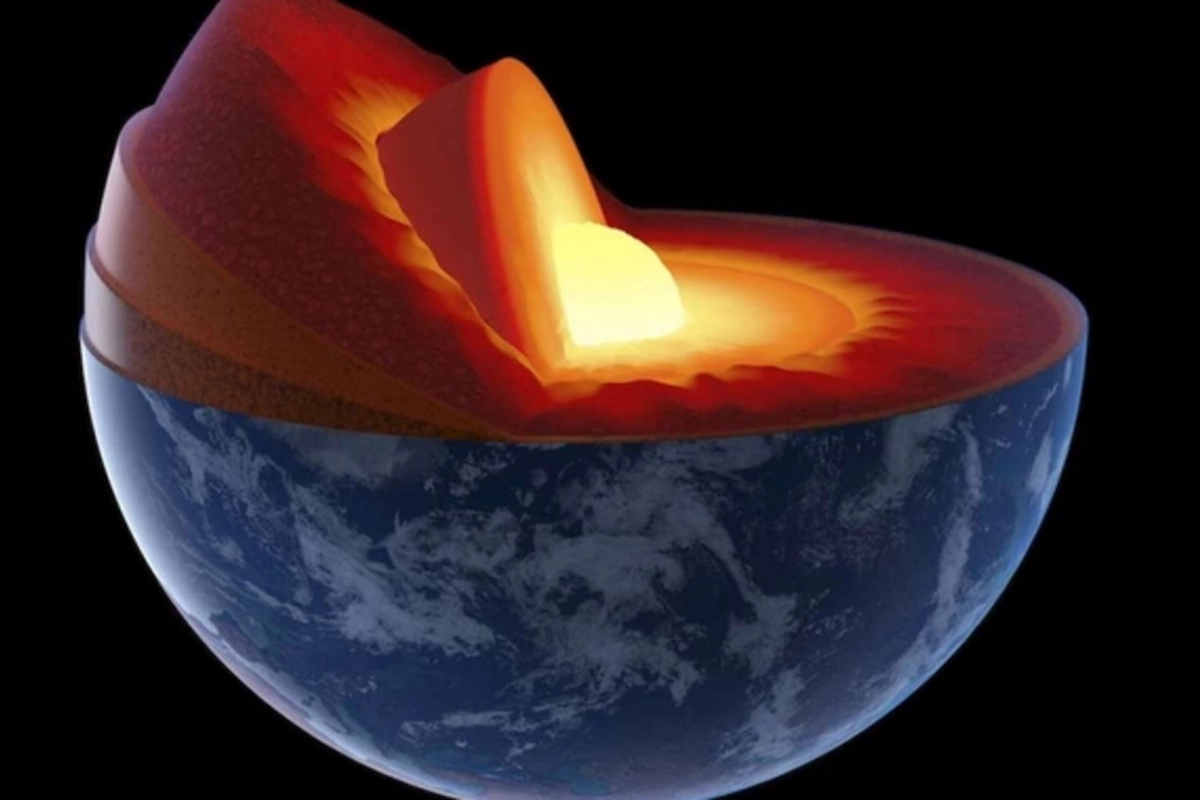
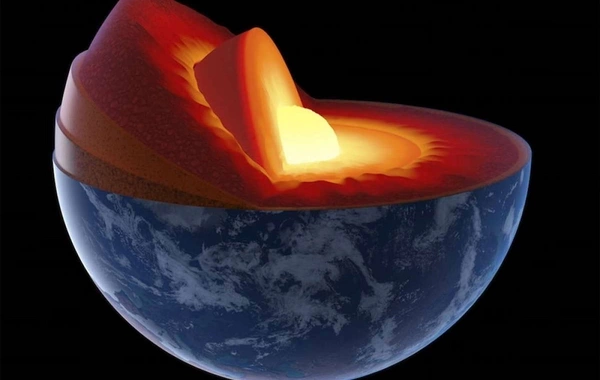
American scientists modeled the behavior of hydrogen in the very heart of our planet — and discovered that an astonishing form of matter may be hidden there: superionic hydrogen, which flows like a liquid while simultaneously conducting electricity. The results of the study were published in the journal PNAS.
The researchers studied two crystalline structures of an iron-hydrogen alloy: hexagonal close-packed (HCP) and body-centered cubic (BCC). Under normal conditions, the BCC structure is inferior to HCP in stability and exhibits higher reactivity. It becomes stable only under extreme parameters — temperatures exceeding 6,400 kelvins, hydrogen content of at least 20%, and pressures on the order of 3.6 million atmospheres. However, as calculations showed, such extreme conditions would more likely turn the substance into something resembling a "fiery iron mush," completely melting it, rather than allowing a stable structure to form.
This is precisely why the authors of the study consider a more realistic scenario in which the superionic phase of hydrogen exists in the HCP structure — which is capable of coexisting with the liquid material of the outer core. In addition, the scientists recorded a sharp radial gradient in hydrogen concentration: its amount drops rapidly at the boundary between the outer and inner core.
As the researchers emphasize, the exchange of hydrogen between the core's layers is not simply a matter of crystallization — the element is continuously redistributed, giving rise to what is known as chemical buoyancy. It is this process that sustains the operation of the geodynamo — the mechanism that generates Earth's magnetic field. The planet's inner core grows by approximately one millimeter per year, and the distribution of hydrogen between its layers is determined primarily by temperature rather than pressure.